Blog
Autumn Sorbet Flavours: A Seasonal Guide for Your Menu
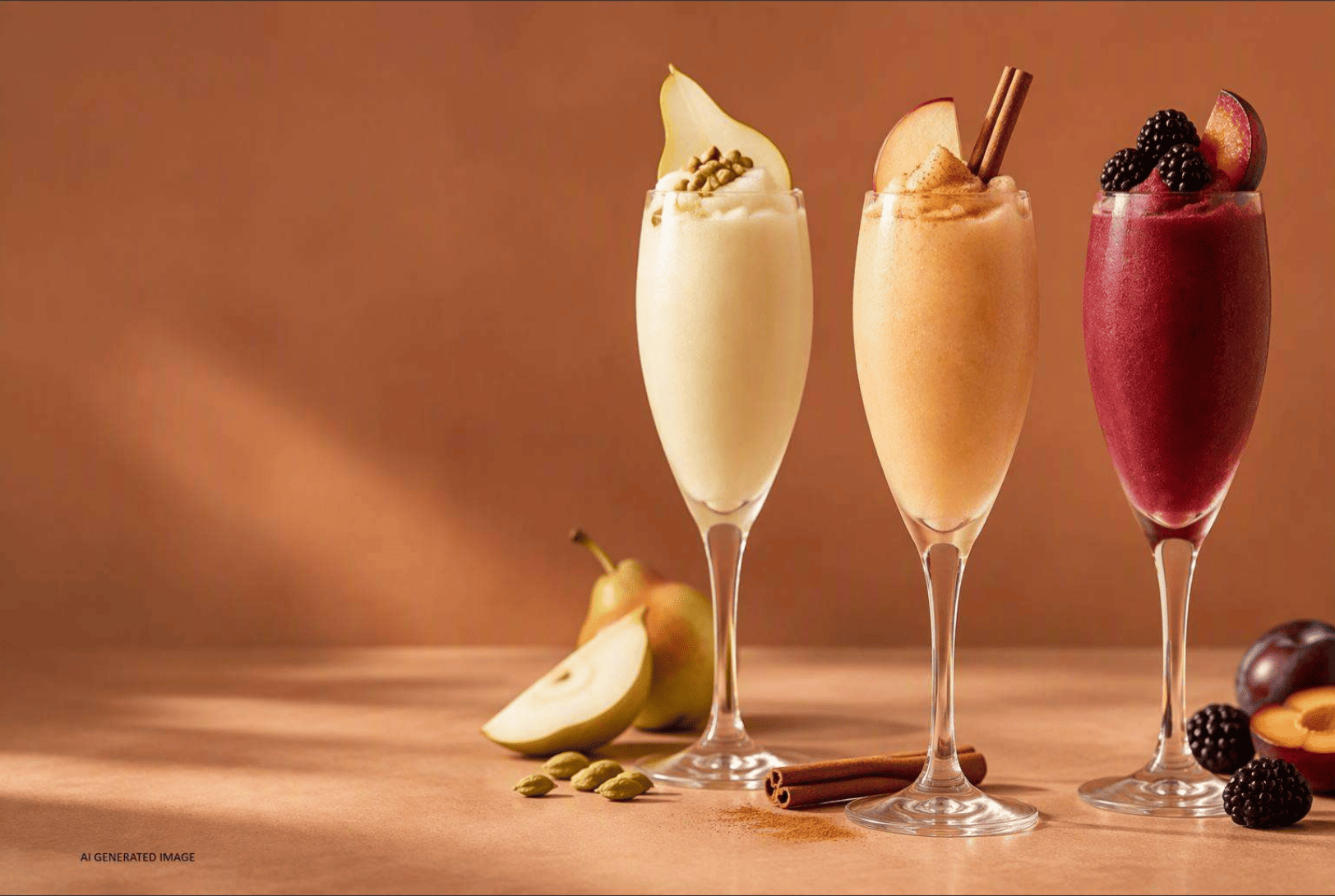
Most sorbet machines go quiet the moment the summer rush ends, switched off or pushed to the back of the kitchen until next June. That’s a missed opportunity. Sorbet doesn’t have a season, only the flavours on the menu do, and autumn brings some of the best fruit of the year to work with.
If you’ve spent the summer months building a solid sorbet offer, this is the point where you decide whether that investment keeps earning its place on the menu or sits idle for the next six months.
If you’ve spent the summer months building a solid sorbet offer, this is the point where you decide whether that investment keeps earning its place on the menu or sits idle for the next six months.
Why Sorbet Works Beyond Summer
The assumption that sorbet is a warm-weather product is more habit than fact. It’s a lighter, dairy-free alternative to ice cream, which makes it just as relevant as a palate cleanser, a dessert course, or a lower-calorie option in October as it is in July. What changes with the season isn’t demand for sorbet itself, it’s the flavours customers expect to see.
Keeping sorbet on the menu into autumn also protects the return on the equipment you’re already running. A machine that only earns its keep for four months of the year is a harder number to justify than one that stays productive across two or three seasons. Rotating the flavours, rather than retiring the category, is usually the more profitable move.
Keeping sorbet on the menu into autumn also protects the return on the equipment you’re already running. A machine that only earns its keep for four months of the year is a harder number to justify than one that stays productive across two or three seasons. Rotating the flavours, rather than retiring the category, is usually the more profitable move.
Autumn Sorbet Flavours Worth Adding to the Menu
Autumn fruit lends itself naturally to sorbet, often more so than the delicate summer berries that dominate a June or July menu.
- Pear and fig both hold their flavour well when frozen and pair naturally with warm spice, think pear and cardamom, or fig with a touch of cinnamon.
- Spiced apple, made with a base of cooking apple and a light hit of cinnamon or clove, gives you an autumn-forward flavour that still reads as refreshing rather than heavy.
- Blackberry and damson, if you can source them, bring a deep colour and a tartness that works well against sweeter desserts on the same menu.
- Quince is worth a mention too, less common, but with a distinctive floral, honeyed quality once cooked down, it can become a genuine point of difference against competitors running the same three or four “classic” autumn flavours.
What Makes a Good Sorbet Base (Fruit Ratio, Sugar, Acidity)
Autumn fruit tends to behave differently in a sorbet base than summer fruit, and getting the ratios wrong is the most common reason a seasonal flavour underperforms. Fruit content generally needs to sit high, often 30% or more of the total mix, to carry enough flavour once frozen, since cold temperatures dull sweetness and aroma.
Sugar content matters just as much for texture as it does for taste. Too little sugar and the sorbet freezes hard and icy; too much and it won’t set properly. As a starting point, most sorbet bases sit somewhere around 25-30% sugar content by weight, though the exact figure shifts depending on how sweet the fruit itself is. Autumn fruits like pear and fig are naturally sweeter than many summer berries, so recipes often need adjusting downward to avoid an overly sweet, less refreshing result.
Acidity is the third variable, and it’s the one most often overlooked. A touch of lemon juice or citric acid balances the sweetness and helps prevent the sorbet from tasting flat, particularly with lower-acid autumn fruits like pear that don’t have the natural brightness of summer citrus or berries.
Choosing the Right Sorbet Machine for Year-Round Production
None of this matters if the machine behind it can’t keep up with a menu that changes every few months. For most sorbet operations, SPM’s SP and SORBY range sit in a comparable production bracket, both handle similar volumes and are quick to empty, clean and reset between recipes, which makes it realistic to run a pear and cardamom sorbet this month and a citrus sorbet again come spring, rather than treating every flavour change as a bigger operational task than it needs to be. Where they differ is versatility: SP is built specifically for sorbet and cold cream, while SORBY extends into slush, milkshakes and frozen cocktails on the same unit with mechanical consistency control, worth considering for operations whose menu covers more than just sorbet.
For smaller-volume settings or where counter space is limited, NINA answers a different need. Its capacity is deliberately more contained, suited to venues that want sorbet on the menu without producing at SP or SORBY’s scale, or without the space for a larger unit.
For smaller-volume settings or where counter space is limited, NINA answers a different need. Its capacity is deliberately more contained, suited to venues that want sorbet on the menu without producing at SP or SORBY’s scale, or without the space for a larger unit.
Keeping Consistency When You Rotate Flavours Seasonally
Every time you swap a flavour, you’re effectively running a new recipe through the same equipment, and that’s where consistency problems tend to show up, a batch that freezes harder than expected, or one that never quite sets. This is more likely with seasonal fruit than with the same one or two flavours you might run all year, simply because the fruit itself varies more.
Machines with precise temperature control and SPM’s mechanical consistency control make this far more manageable. The system lets you adjust the density of the mix to match how it’s served, firmer for a spoon, softer for a straw, while keeping that consistency stable even as the preparation and freezing temperature change from one flavour to the next. That’s what lets you compensate for a base that behaves slightly differently without guessing your way through a new recipe each time. If you’re planning to rotate flavours every season rather than settling on a fixed menu, it’s worth treating that flexibility as a core requirement when choosing equipment, not an afterthought once the machine is already in place. It’s also a patented part of how SPM’s machines work, covered in more detail on the SPM patents and innovation page.
Get the base right and the machine right, and autumn sorbet stops being a seasonal experiment and becomes exactly what your summer flavours already are: a reliable part of the menu.