Blog
Weird Soft Serve Flavours That Actually Work on a Commercial Menu
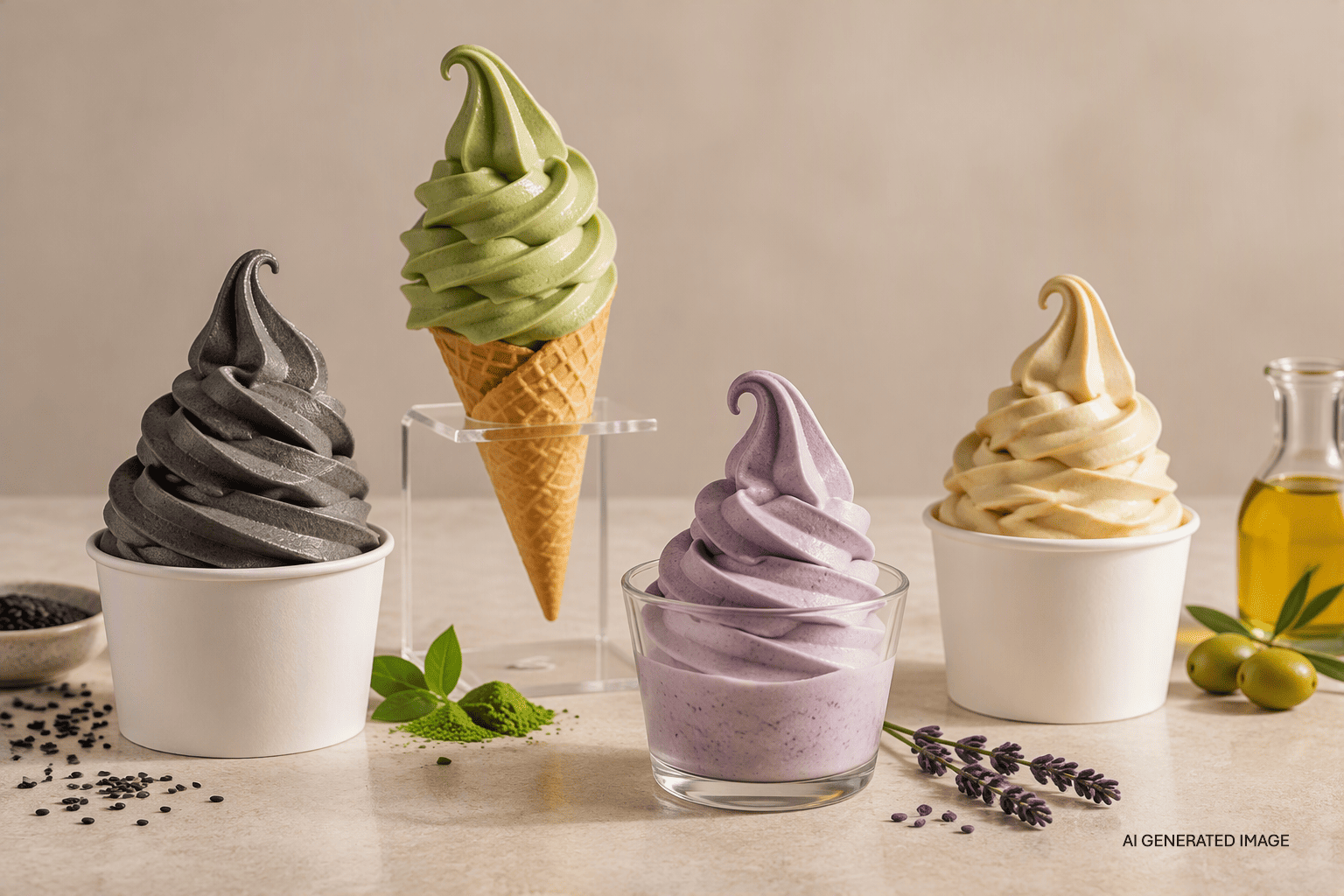
Wasabi, black sesame, olive oil, blue cheese. A few years ago, these would have sounded like a joke on a dessert menu. Today they’re the kind of soft serve flavours that get your venue tagged on Instagram, and increasingly, the reason a customer picks you over the one down the road on a hot afternoon.
If you’re running a bar, café or restaurant with a soft serve machine, unusual flavours are one of the cheapest ways to expand your menu and generate attention without a full relaunch. You don’t need new equipment or a new supplier, just the right flavour, tested the right way, added alongside what you already serve well.
If you’re running a bar, café or restaurant with a soft serve machine, unusual flavours are one of the cheapest ways to expand your menu and generate attention without a full relaunch. You don’t need new equipment or a new supplier, just the right flavour, tested the right way, added alongside what you already serve well.
Why Unusual Flavours Are Driving UK Ice Cream Sales
Novelty flavours aren’t new; soft serve has always had its curiosities, but what’s changed is how quickly they travel. A single well-photographed swirl can reach thousands of people before a single customer has tasted it, and UK dessert venues have leaned into that, from savoury-adjacent flavours in independent soft serve vans and dessert bars to limited-edition drops timed around social trends.
For you, the commercial logic is straightforward. An unusual flavour costs roughly the same to produce as a standard one, but it earns disproportionate attention, brings customers back to try “the weird one”, and gives your venue something to talk about beyond price and location. It’s one of the cheapest ways to keep your menu feeling current between bigger seasonal changes.
For you, the commercial logic is straightforward. An unusual flavour costs roughly the same to produce as a standard one, but it earns disproportionate attention, brings customers back to try “the weird one”, and gives your venue something to talk about beyond price and location. It’s one of the cheapest ways to keep your menu feeling current between bigger seasonal changes.
Weird Flavours That Actually Sell, Not Just Shock Value
Not every unusual flavour earns its place on your menu, and the difference between one that sells and one that’s only there for shock value usually comes down to whether it’s actually pleasant to eat more than once.
Flavours that have moved from novelty to genuinely popular tend to share a few traits.
The flavours that flop are usually the ones built purely around being unusual, with no attention to how they actually taste in a cold, dairy or fruit base. If an idea only works as a headline, it’s probably not worth the batch.
Flavours that have moved from novelty to genuinely popular tend to share a few traits.
- Savoury-adjacent options like black sesame, olive oil or miso caramel work because they bring depth and a slight saltiness that balances sweetness, rather than fighting it.
- Spice-forward flavours such as chilli chocolate or ginger work for the same reason wasabi occasionally does, a controlled kick that makes people come back for a second helping to test it again.
- Herbal and floral notes, lavender honey, basil, rosemary, tend to perform best in warmer months and pair well with fruit-based bases.
The flavours that flop are usually the ones built purely around being unusual, with no attention to how they actually taste in a cold, dairy or fruit base. If an idea only works as a headline, it’s probably not worth the batch.
How to Test a New Flavour Without Risking Your Core Menu
This is where you need to think operationally, not just creatively. Committing your entire soft serve tank to an experimental flavour is a real risk if it doesn’t land, because you’ve taken your best-selling product off the menu to test something unproven.
A multi-tank setup solves this cleanly. If you’re running SPM’s GT range, the tanks operate independently in terms of both temperature and consistency, so you can keep a reliable vanilla or classic base running in one tank while trialling an unusual flavour in the other, without touching your core offer. If you’re running a single-tank SO-SOFT unit, you don’t need to touch your soft serve mix at all to test a new idea.
Running it first as a small-batch sorbet or cold cream on SPM’s SP or NINA, machines built for frozen preparations like sorbets and cold creams rather than soft serve itself, lets you gauge how a flavour performs before deciding whether it’s worth reformulating your main soft serve offer around it.
Either way, treat an unusual flavour as a controlled trial on your menu, not a full commitment, until you know it actually sells.
Getting Consistency Right When You Go Off-Menu
Unusual ingredients often behave differently from standard flavour bases. Purees with more fibre, nut-based pastes, or anything with a higher fat or sugar content than your usual mix can throw off texture in ways a classic vanilla or chocolate base won’t, leaving you with iciness, separation or a product that’s harder to dispense cleanly.
This is exactly why your machine’s consistency controls matter more here than on a standard menu. SO-SOFT’s three programmable levels of consistency, and the GT range’s ability to balance temperature, timing and churning speed for each recipe, give you a way to adjust for an unusual base instead of accepting a lower-quality result. It’s the detail that rarely comes up in flavour trend articles, but it’s the difference between a weird flavour that photographs well and one that still tastes right by the third day of service.
Get this right and the payoff is straightforward: menu expansion that costs you almost nothing beyond ingredients, more reasons for customers to keep coming back, and proof that experimentation doesn’t have to come at the cost of the menu that already works for you.