Blog
What Is Sgroppino? The Italian Cocktail-Dessert
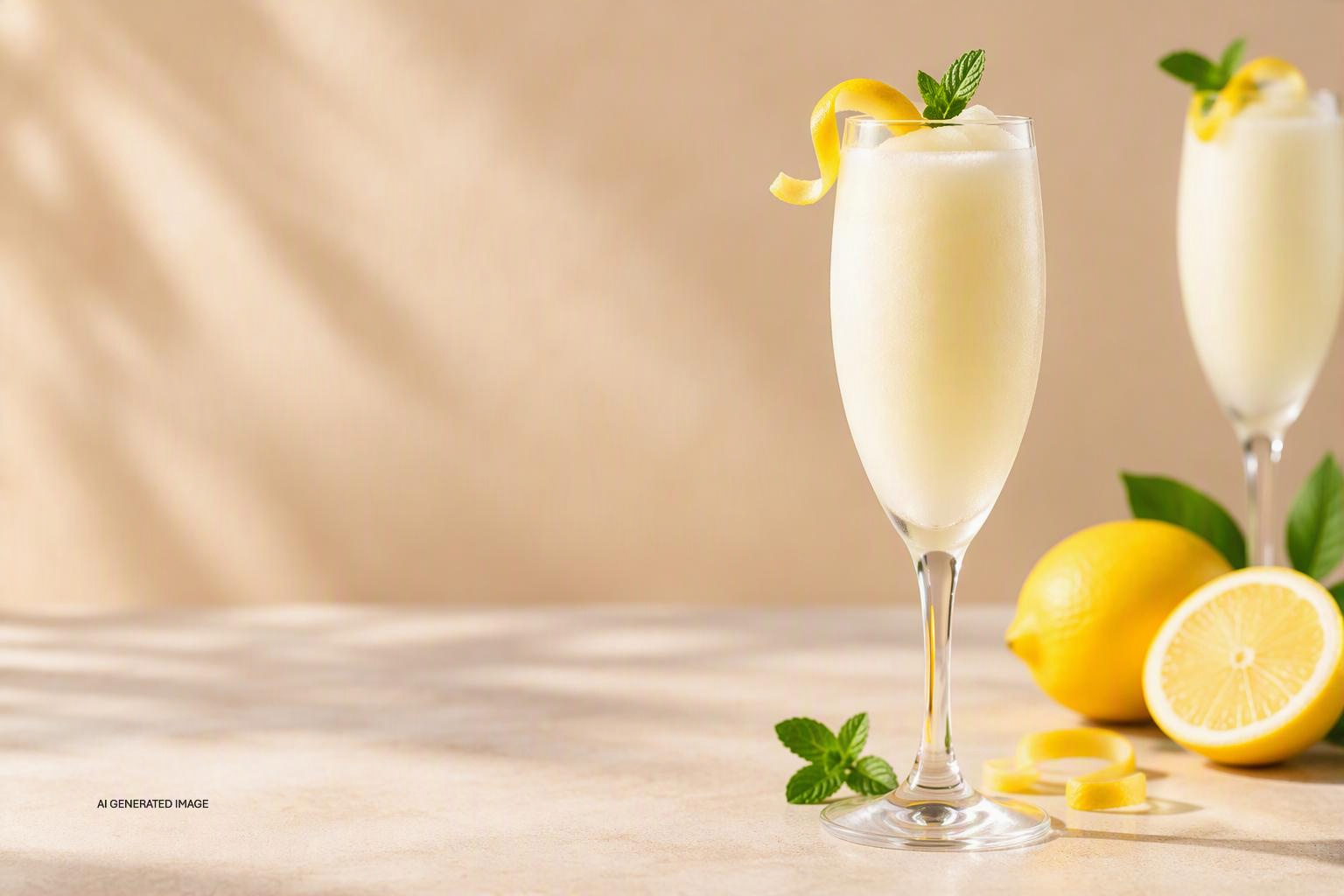
Three ingredients, blitzed together until it turns to slush. That’s the entire recipe for sgroppino, and it’s exactly why so many bars still get it wrong. A drink this simple lives or dies on the quality of one ingredient in particular, and it isn’t the alcohol.
Sgroppino has been quietly building momentum on UK cocktail menus over the past few years, moving from an Italian restaurant staple to a drink bars are adding specifically to capture customers looking for something lighter than a classic cocktail but more interesting than a glass of prosecco on its own. If you already run a sorbet machine for desserts, it’s also one of the simplest ways to get more out of equipment that would otherwise sit idle between covers; the same lemon sorbet that closes out a meal can open your drinks menu too.
Sgroppino has been quietly building momentum on UK cocktail menus over the past few years, moving from an Italian restaurant staple to a drink bars are adding specifically to capture customers looking for something lighter than a classic cocktail but more interesting than a glass of prosecco on its own. If you already run a sorbet machine for desserts, it’s also one of the simplest ways to get more out of equipment that would otherwise sit idle between covers; the same lemon sorbet that closes out a meal can open your drinks menu too.
What Is Sgroppino and Where Does It Come From
Sgroppino originates from the Veneto region of Italy, where it was traditionally served as a digestivo, a palate-cleansing drink between courses of a long meal, particularly after rich or fish-based dishes. The name comes from the Venetian dialect verb sgropar, roughly meaning “to untie a knot”, a fitting description of what the drink is meant to do to a full stomach.
What started as a between-course tradition has since moved firmly into cocktail territory, served on its own as a light, celebratory drink rather than strictly as a course in a meal. In the UK, that shift has made it a natural fit for brunch menus, aperitivo-style bar lists and anywhere a venue wants to offer something that feels indulgent without being heavy.
What started as a between-course tradition has since moved firmly into cocktail territory, served on its own as a light, celebratory drink rather than strictly as a course in a meal. In the UK, that shift has made it a natural fit for brunch menus, aperitivo-style bar lists and anywhere a venue wants to offer something that feels indulgent without being heavy.
The Three Ingredients That Make a Real Sgroppino
A traditional sgroppino is built from just three components:
The ratio matters more than most bartenders expect. Too much prosecco and the drink turns thin and loses its characteristic slushy body; too much sorbet and it becomes closer to a dessert than a drink. Most recipes lean towards a generous scoop of sorbet to a modest pour of prosecco, with the vodka added sparingly, more for structure than strength.
- lemon sorbet;
- prosecco;
- a splash of vodka.
The ratio matters more than most bartenders expect. Too much prosecco and the drink turns thin and loses its characteristic slushy body; too much sorbet and it becomes closer to a dessert than a drink. Most recipes lean towards a generous scoop of sorbet to a modest pour of prosecco, with the vodka added sparingly, more for structure than strength.
How to Make Sgroppino
In a bar or restaurant, sgroppino isn’t whipped up from scratch every time an order comes in, it’s built around having a properly textured lemon sorbet ready to go at any point in service. For venues serving it in real volume, that’s the role SPM’s SP and SORBY ranges are built for, both suited to a busier, more structured service with continuous mixing that keeps the sorbet creamy rather than icy however long it’s been sitting in the tank. SP also adds a couple of details worth knowing about, a UV sanitising light for the tank and product illumination, neither of which NINA or SORBY offer, and both can matter depending on the mix or powder base you’re using. For a smaller bar or a lower-volume, countertop setup, NINA answers a different need, the same sorbet quality on a more contained scale.
The process at the bar is straightforward once that base is in place. A portion of lemon sorbet goes into a chilled glass, prosecco is poured in gradually, and a small measure of vodka finishes it off, stirred or briefly whisked together until it’s light and just pourable. This is also why sgroppino specifically calls for sorbet rather than granita, the smooth, churned texture blends into a drinkable consistency in a way that granita’s coarser ice crystals don’t. If you’re weighing up which of the two suits your menu better, our piece on granita vs sorbet covers the difference in more depth.
For a bar making sgroppino to order, this is what makes it practical at any real volume: the sorbet is already at serving consistency the moment it’s needed, rather than something made fresh, and inconsistently, drink by drink.
Flavour Variations and Non-Alcoholic Versions
While lemon remains the definitive sgroppino flavour, bars looking to differentiate their menu have started experimenting with variations: elderflower, blood orange, or a lemon and basil sorbet base, each keeping the same fundamental structure while offering something slightly different. Our guide to the most popular sorbet flavours to serve is a useful starting point if you’re planning to build out a flavour range beyond the classic version.
A non-alcoholic sgroppino is also straightforward to produce; simply swap the prosecco for a sparkling elderflower or non-alcoholic sparkling wine and drop the vodka entirely. Given how many venues are expanding low and no-alcohol options, this is a relatively easy addition to make without building a separate mocktail programme from scratch.
A non-alcoholic sgroppino is also straightforward to produce; simply swap the prosecco for a sparkling elderflower or non-alcoholic sparkling wine and drop the vodka entirely. Given how many venues are expanding low and no-alcohol options, this is a relatively easy addition to make without building a separate mocktail programme from scratch.
Why the Sorbet Machine Makes or Breaks the Result
The lemon sorbet isn’t a garnish here, it’s the ingredient that determines whether the drink actually works. A sorbet that’s too icy, too soft, or inconsistent from batch to batch will produce a noticeably different drink each time it’s ordered, which is a problem the moment sgroppino appears on a menu as a repeatable item rather than an occasional special.
Which machine makes sense depends mostly on volume and service style. SP and SORBY sit in a comparable bracket, both built for bars and restaurants serving sgroppino at real volume with a more structured service; SP’s UV tank sanitising and product illumination are worth weighing against SORBY’s added versatility across sorbet, slush, milkshakes and frozen cocktails, since the right choice often comes down to how the rest of your frozen menu is set up. NINA, by contrast, is built for a more contained, countertop scale, a better fit for venues that want sgroppino on the menu without needing to produce at SP or SORBY’s throughput. As with most equipment decisions, the final call usually comes down to matching the machine to the venue and the wider menu, which is exactly what a conversation with SPM’s sales team can help settle.
Either way, the real value here isn’t just one new drink. It’s turning a machine you may already own into something that earns its place across two parts of the menu instead of one, dessert during the day, cocktails in the evening, from the same tank.