Blog
What’s the Difference Between Soft Serve and Ice Cream?
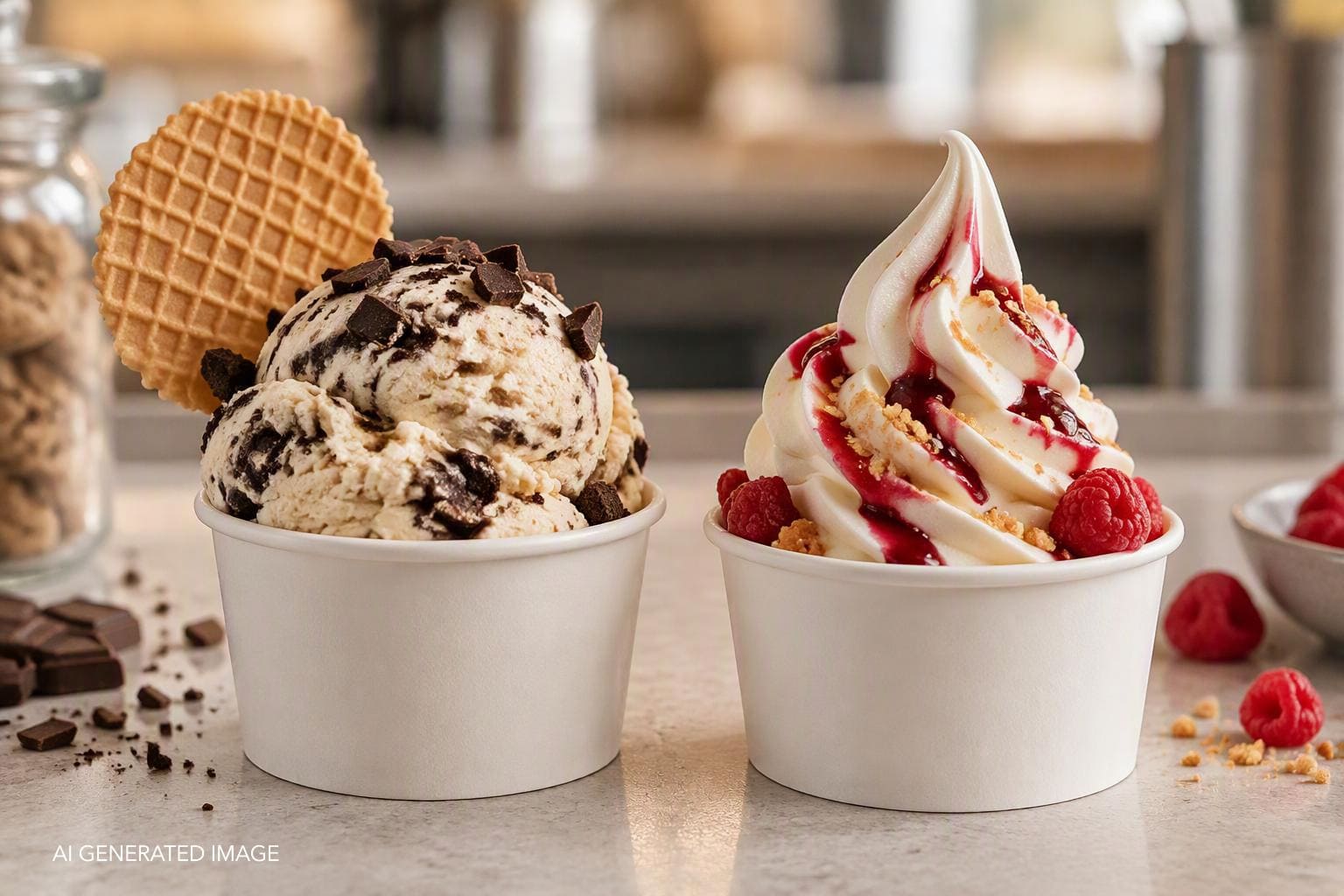
Ask ten customers what makes soft serve different from ice cream, and most will say “the texture”. They’re not wrong, but texture is the result, not the cause. The real differences sit in fat content, air incorporation and the machine technology behind each product, and understanding them matters if you’re deciding what to put on your menu, not just what to eat.
For operators, the distinction isn’t academic. Soft serve and traditional ice cream come with different equipment, different running costs and different customer expectations. Getting this right from the start saves you from investing in the wrong machine for your venue.
For operators, the distinction isn’t academic. Soft serve and traditional ice cream come with different equipment, different running costs and different customer expectations. Getting this right from the start saves you from investing in the wrong machine for your venue.
Fat Content, the Real Difference Between Soft Serve and Ice Cream
Traditional ice cream typically contains between 4% and 10% fat, depending on the recipe and quality tier. That fat content is what gives scooped ice cream its dense, rich structure, and it’s also why it needs to be stored and served at very low temperatures, usually around -18°C, to hold its shape.
Soft serve mixes tend to sit lower, generally between 3% and 6% fat. Less fat means a lighter product, but it also means soft serve can’t be scooped and held the way traditional ice cream can. It’s designed to be dispensed and eaten fresh, straight from the machine, which is precisely why the machine itself plays such a bigger role in the final result.
Soft serve mixes tend to sit lower, generally between 3% and 6% fat. Less fat means a lighter product, but it also means soft serve can’t be scooped and held the way traditional ice cream can. It’s designed to be dispensed and eaten fresh, straight from the machine, which is precisely why the machine itself plays such a bigger role in the final result.
Why Soft Serve Contains More Air, Overrun Explained
The other major variable is overrun, the industry term for how much air gets incorporated into the mix during freezing. Traditional ice cream generally has an overrun of around 15-25%, while soft serve typically runs from 30% up to 60% or more, depending on the machine and settings.
This is where the churning process becomes central. As the liquid base moves through the freezing cylinder, continuous agitation transforms it from a liquid into a creamy, aerated product before it ever reaches the customer. More air means a lighter mouthfeel and a lower cost per serving, since you’re getting more volume from the same amount of base mix. It’s one of the reasons soft serve remains a strong margin play for operators who get the settings right.
This is where the churning process becomes central. As the liquid base moves through the freezing cylinder, continuous agitation transforms it from a liquid into a creamy, aerated product before it ever reaches the customer. More air means a lighter mouthfeel and a lower cost per serving, since you’re getting more volume from the same amount of base mix. It’s one of the reasons soft serve remains a strong margin play for operators who get the settings right.
How the Machine Changes the Texture
This is the part that often gets skipped in consumer-facing explanations, but it’s the one that matters most for a business. Soft serve equipment doesn’t just freeze the product, it actively shapes its final texture through the feeding system.
Machines like SPM’s SO-SOFT range come in gravity-fed and pump-fed versions, and the choice between them has a real impact on results.
If you’re actively comparing models, our guide on how to choose the best soft ice cream machine breaks these features down in more detail. None of this is visible to the customer eating the cone, but it’s exactly what separates a consistent, profitable soft serve programme from an inconsistent one.
Machines like SPM’s SO-SOFT range come in gravity-fed and pump-fed versions, and the choice between them has a real impact on results.
- The pump-fed SO-SOFT allows for greater overrun, producing a lighter, airier texture and a higher yield per litre of mix, which suits venues that prioritise volume and want to reduce cost per serving.
- The gravity-fed SO-SOFT GRAVITY tends to give a denser, more traditional soft serve texture and is often simpler to manage for lower-volume settings.
If you’re actively comparing models, our guide on how to choose the best soft ice cream machine breaks these features down in more detail. None of this is visible to the customer eating the cone, but it’s exactly what separates a consistent, profitable soft serve programme from an inconsistent one.
Soft Serve vs Gelato and Frozen Yogurt, Where They Differ
Since we’re on the topic of frozen desserts, it’s worth being precise about where soft serve sits next to its two closest relatives, gelato and frozen yogurt, because the three are often confused and the confusion has real consequences for equipment choice.
- Gelato is churned at a much slower speed than soft serve or traditional ice cream, which incorporates far less air (typically under 25% overrun) and results in a denser, more intensely flavoured product. Gelato is also traditionally served slightly warmer than ice cream. At a higher serving temperature, the product is less frozen and less hard, so it feels softer and creamier on the tongue, and the flavour comes through more quickly. Gelato is generally produced with dedicated batch freezers designed specifically for that slow-churn process, a different category of equipment from soft serve dispensers.
- Frozen yogurt, on the other hand, is much closer to soft serve in terms of production. It uses a yogurt-based mix instead of a dairy ice cream base, but runs through the same style of continuous-freeze dispensing equipment. That’s why a machine like SPM’s SO-SOFT can serve frozen yogurt alongside soft serve ice cream. For more versatility, the GT range can dispense up to five products from a single unit, including soft serve, frozen yogurt, cold creams, sorbet and slush.
Which One Should Your Business Offer
For a bar or restaurant owner, the decision usually comes down to volume, space and the kind of experience you want to offer. Soft serve works well where footfall is high and speed of service matters; cafés, kiosks, amusement parks and fast-casual venues all benefit from a product that can be dispensed consistently in seconds. It also tends to have a lower cost per serving than scooped ice cream, which helps margin on high-volume days.
For an manager weighing up equipment for a new or existing venue, the more useful question isn’t “soft serve or ice cream” in the abstract, but what your daily volume looks like, whether you want to offer more than one frozen product from the same machine, and how much staff time you can dedicate to cleaning and maintenance.
A multi-product machine like the GT Touch can make sense if you want flexibility to test frozen yogurt or sorbet alongside a soft serve core menu, while a dedicated soft serve unit like SO-SOFT suits venues that know exactly what they want to serve and want to serve it well. Once you’ve settled on a machine, the practical side, what soft serve equipment you actually need day to day and what to put in the machine itself, is covered in more detail in our other guides.
Either way, the choice isn’t really about which product is “better”. It’s about which one fits your venue, your customers and the way you plan to run service.